

Audio Note from John
In today’s Accessible Intermediate Chinese (AIC) lesson, we step out of the typical work routine and into a very relatable modern urban scenario: the mystery of the “missing” food delivery.
This dialogue highlights how a simple lunch order can quickly turn into a communication breakdown involving app notifications, saved addresses, and real-world location details. From “delivered” status messages to outdated workplace information, the conversation reflects how much we rely on digital systems to handle everyday logistics.
Has this ever happened to you, like it has to John? Is there a phrase, customer service interaction, or digital life experience in China you’d like us to look at more closely? Let us know in the comments!
发音: Tone Pair
In this lesson, we’ll look at another very common tone pattern in Mandarin that appears in everyday conversations: the 1-1 tone pair.
At first, this combination may seem simple because both tones are high and level. However, many learners actually struggle with it because they tend to make the two syllables sound too identical or too flat, without enough natural rhythm between them.
Tone Pair 1-1: Why does it feel so repetitive?

Tone 1 is a high-level tone, which means it stays relatively flat and high in pitch. When two Tone 1 syllables appear together, native speakers do not pronounce them as two identical “monotone” beats. Instead, the first Tone 1 is usually slightly stronger and more stable, while the second Tone 1 is a bit lighter and smoother to keep the phrase flowing naturally.
It’s possible to make the mistake of over-flattening both tones equally, which can make the phrase sound robotic or disconnected. Don’t worry about this too much; it’s better to sound like a robot than to not be understood. The more you speak, the more natural your pronunciation will be.
(Audio samples can be found on the AllSet Learning Pronunciation Wiki page: Tone pair 1-1)
Thanks for reading AIC (Accessible Intermediate Chinese)! This post is public so feel free to share it.
对话:那个“消失”的外卖

(场景:下午一点,在一栋办公楼里。马克正在前台焦急地翻找,同事晓燕端着咖啡路过。)
晓燕:马克,你干嘛呢?你在找什么?
马克:我在找我的午饭。它……消失了。
晓燕:消失了?怎么可能?
马克:是一个外卖。我花了六十八块。它显示“已送达”,但是,没有。
晓燕:你再找找,是不是哪个同事帮你拿了?
马克:你看,“您的订单已送达,感谢您的耐心等待”。我很有耐心,可是它没到。
晓燕:你有没有想过,可能是外卖小哥放错地方了?
马克:不可能。我的地址写得很清楚:创新路八十八号,A座,十五楼,一五零三室,“门口的小桌子上”。
晓燕:等等……创新路八十八号?
马克:对啊。
晓燕:这里是……科技路六十六号。
马克:啊!
晓燕:创新路八十八号是我们公司去年的地址。我们搬家了,你记得吗?上个月的事。
马克:啊……那个地址是系统自动填的。
晓燕:那你为什么不改?
马克:我觉得……它应该懂我。
晓燕:你觉得一个点饭的软件应该懂你?
马克:购物软件懂我,看剧软件懂我,为什么点饭软件不懂我?
晓燕:因为它只是一个点饭的工具,不是你前女友。
马克:你说得对。
NOTE: If you need more pinyin, be sure to install a pinyin popup browser extension. We like the “Zhongwen” one because the name is so easy to remember.
词汇:
消失 (xiāoshī) to disappear
外卖 (wàimài) takeout, to go (for food bought at a restaurant)
前台 (qiántái) reception desk
焦急 (jiāojí) anxious
翻 (fān) to turn over
端 (duān) to hold sth level with both hands
路过 (lùguò) to pass through, to pass by
订单 (dìngdān) (purchase) order
送达 (sòngdá) to deliver
耐心 (nàixīn) to be patient; patience
等待 (děngdài) to wait
外卖小哥 (wàimài xiǎogē) delivery guy
地址 (dìzhǐ) address
清楚 (qīngchu) clear
创新路 (Chuàngxīn Lù) Chuangxin Road
科技路 (Kējì Lù) Keji Road
搬家 (bānjiā) to move house
记得 (jìde) to remember
系统 (xìtǒng) system
自动 (zìdòng) automatic
填 (tián) (of a form etc) to fill in
改 (gǎi) to change, to alter
点饭 (diǎn fàn) to order food
软件 (ruǎnjiàn) software
购物 (gòuwù) shopping
看剧 (kàn jù) to watch a TV series
工具 (gōngjù) tool
前女友 (qiánnǚyǒu) ex-girlfriend
语法:
We’ll just look at one basic pattern this time. For more explanation, be sure to follow the links to AllSet Learning’s very own Chinese Grammar Wiki.
Complements after Verbs
Once you learn to use degree complements, a whole new layer of expressiveness is infused into your language. You will be able to express degree of verbs and adjectives with much more precision and color. Today we are using degree complements to express how a verb happened or assess its quality.
Structure

From today’s dialogue:
马克:不可能。我的地址写得很清楚:……
Negative Form
The only difference between the affirmative and negative forms is swapping a 得 for a 不.
Structure

So the example from today’s dialogue, in negative form, would be:
我的地址写得不清楚:……
文化:
When “Delivered” Does Not Always Mean “Received” in Modern Chinese Delivery Culture
If you use food delivery apps in China, you may occasionally encounter situations where the system says an order has arrived, but the food is not actually in hand.
In this week’s dialogue, the confusion comes from a mismatch between digital confirmation and physical reality, as well as an outdated address still stored in the system. Is this a rare mistake or something more common?
In many fast-paced urban environments, delivery services rely heavily on automation, default settings, and previously saved user information. This can make the process extremely efficient, but it also means that small data errors can quickly lead to confusion at the delivery point.
At the same time, conversations like this highlight how people often interact with technology as if it understands context and intention, even when it is simply following programmed instructions.
For learners, this helps illustrate not just language for delivery problems, but also how digital dependency and everyday expectations intersect in modern China.
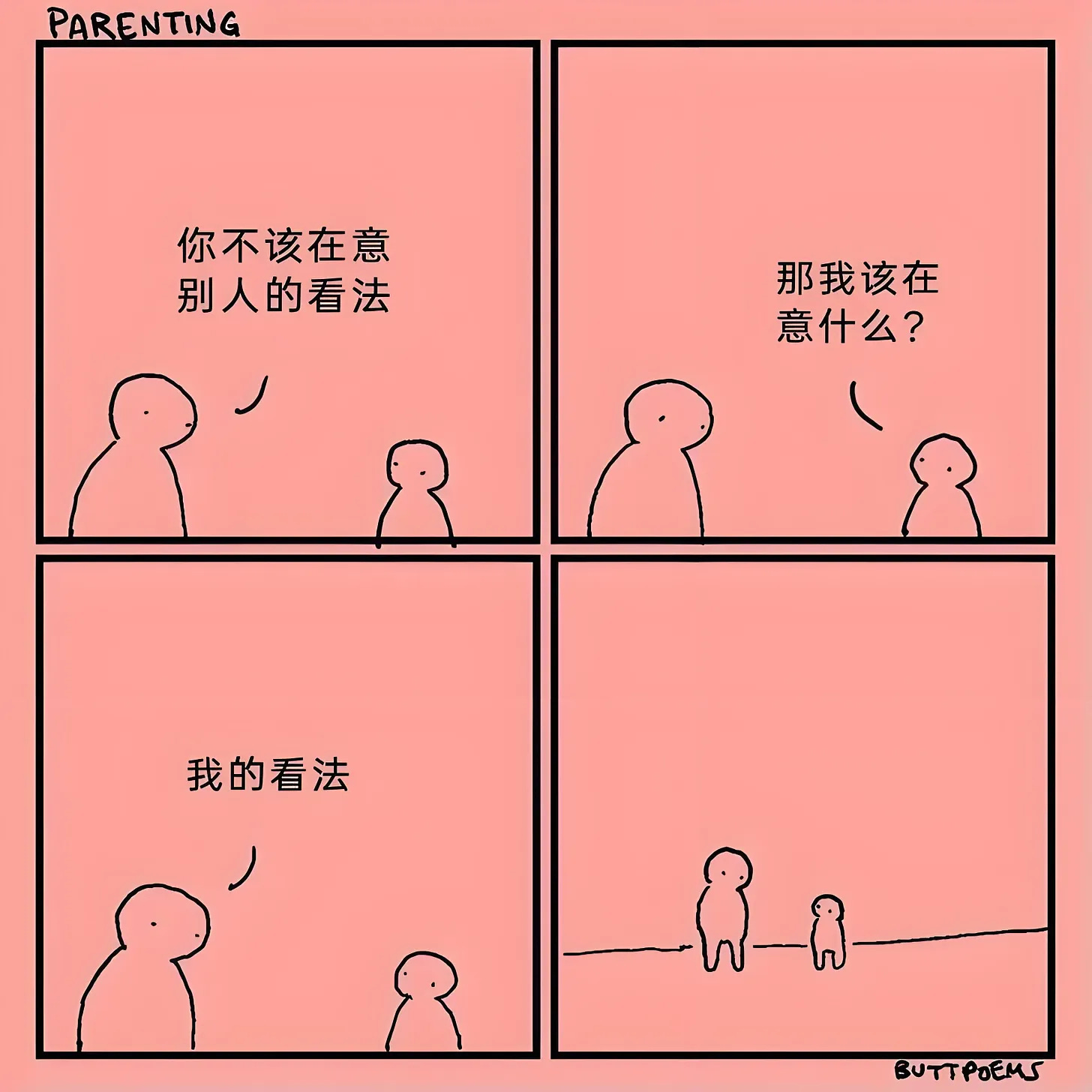
幽默:在意我的看法
Text:
你不该在意别人的看法
那我该在意什么?
我的看法
关键词:
不该 (bùgāi) should not
在意 (zàiyì) to care about;to mind
别人 (biérén) other people
看法 (kànfǎ) point of view
More from AllSet Learning
This summer, we’re launching a brand-new course: “Beyond the Guidebook: A Chinese Travel Course”, and it’s unlike any travel-focused Chinese course you’ve seen before.
Each lesson takes you deep into one of China’s most fascinating cities, from iconic destinations like Beijing and Chengdu to lesser-known gems that even seasoned travelers often overlook. Beyond the landmarks, you’ll discover the side streets, the hidden restaurants, the local stories. The kind of detail that only makes sense once you can actually speak the language.

The course is designed for intermediate learners (B1 and above) and combines cultural reading, real-life travel dialogues, and travel-centric discussion to build both your fluency and your confidence. Every lesson is a live, one-on-one session with a trained native Chinese teacher, so you get the local insight and the language practice, all in 60 minutes.
Looking forward to traveling to China someday, but not quite ready yet? This is the next best thing! Get valuable, practical conversation practice while preparing yourself for your future journey. Future you will thank you!
