
AIC #16: Ordering Delivery 🍜 “What Are You Going to Order?” ⭐
凑单,免配送费,肉夹馍

Note from John
In today’s Accessible Intermediate Chinese (AIC) lesson, we focus on a very common part of office life: ordering lunch with coworkers.
So many everyday workplace interactions are packed into a simple food order. Along the way, the colleagues discuss delivery apps, sharing orders, payment methods, delivery times, and even which dishes they recommend.
There were many language and cultural details we could have explored further in this lesson. Is there a phrase, food-related expression, or aspect of office life in China that you’d like us to unpack more deeply? Let us know!
发音: Tone Pair
In the lesson, you’ll encounter another important tone combination that appears frequently in everyday Mandarin: Tone 4 + Tone 1. At first, this pair can feel a little unusual because it combines the strongest falling tone in Mandarin with the highest and most level tone.
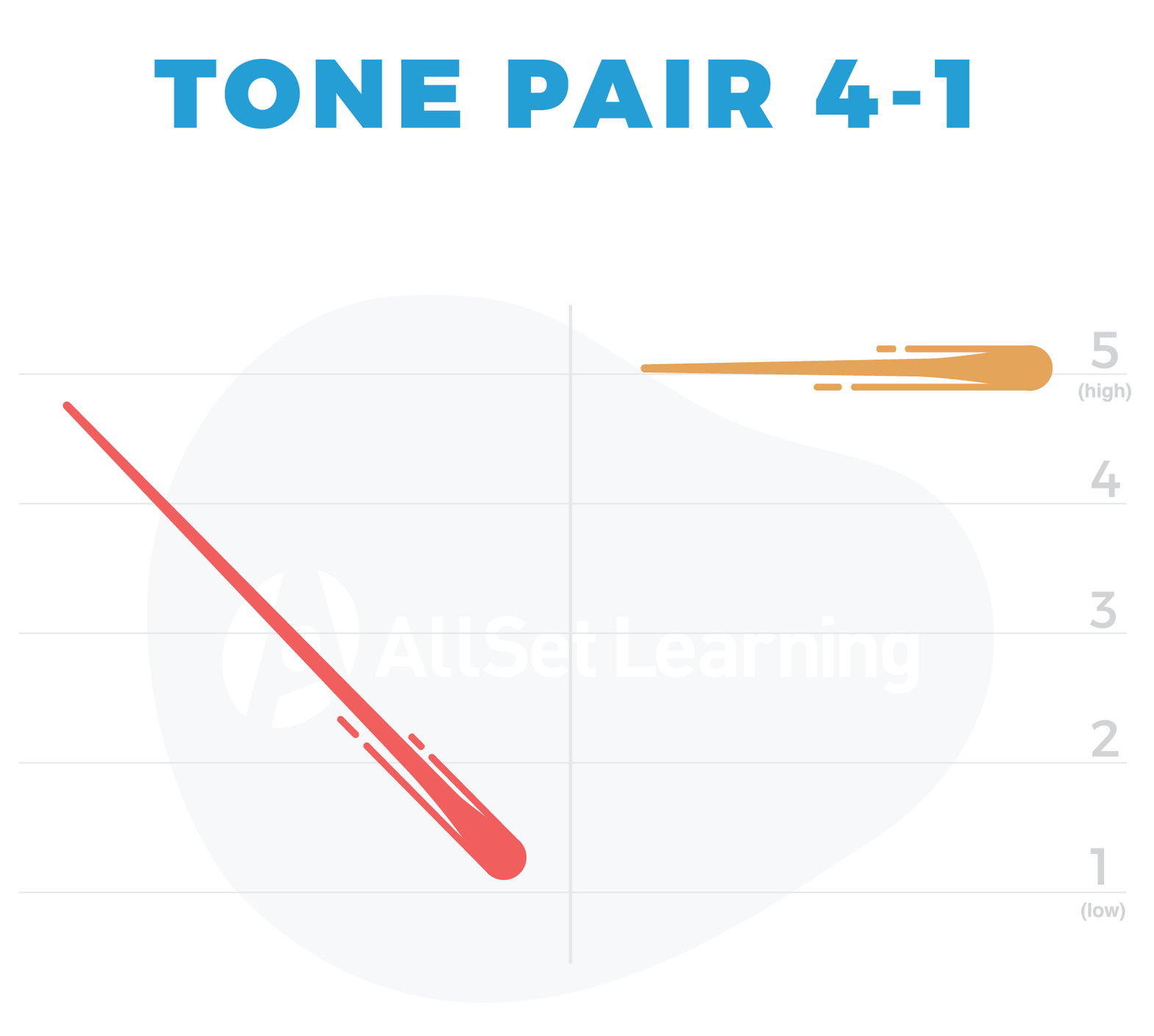
Tone Pair 4-1: Why does it sound so clear and decisive?
Tone 4 starts relatively high and falls sharply downward, while Tone 1 stays high and level. When these two tones appear together, the contrast between the falling motion and the steady high pitch creates a very distinct rhythm that native speakers produce naturally.
Many learners make the mistake of not completing the fall of Tone 4 before moving into Tone 1. As a result, the first syllable may sound weak, or the second syllable may lose its high, level quality. Instead, think of Tone 4 as a confident drop that fully finishes before Tone 1 begins.
The practical takeaway: allow Tone 4 to fall clearly and decisively, then hold Tone 1 high and steady. Once you become comfortable with the rhythm of 4-1 combinations, many common Mandarin phrases will start sounding more natural and easier to understand. (Audio samples can be found on the AllSet Learning Pronunciation Wiki page: Tone pair 4-1)
Thanks for reading AIC (Accessible Intermediate Chinese)! This post is public so feel free to share it.
对话:点外卖

(场景:中午12点半,公司休息区。大卫的同事小李正准备点外卖)
小李:大卫,一起去附近的餐厅吃饭吗?
大卫:今天不太想去,外面太热了。我打算点个外卖。
小李:好主意!我也正想点。你准备点什么?要不要一起凑个单?可以免配送费。
大卫:好啊,我准备点公司旁边那家陕西面馆。你想吃面吗?
小李:陕西面馆?他家的油泼面很不错!我也来一份。你手机能点吗?帮我一起点了,我待会儿转给你钱。
大卫:没问题。我来看看……你吃什么?还是要油泼面吗?
小李:对,还是要油泼面,多放点蔬菜。你呢?
大卫:我想试试他家的刀削面,听说很有名。再加一个肉夹馍。
小李:肉夹馍也很好吃!那你点好了叫我,大概多久能到?
大卫:我看一下……现在下单,预计30分钟送到。那我们就12点45分下去拿?
小李:行,正好。对了,你用什么支付?支付宝还是微信?
大卫:我两个都用。这次用微信吧。
小李:好的,多少钱?我现在转给你。
大卫:你那份油泼面是32块。
小李:转给你了,你收一下。
大卫:收到了。一会儿外卖到了会打电话,我们直接下去拿就行。
小李:太好了,谢谢你帮我点!下次我请你喝咖啡。
大卫:别客气!
NOTE: If you need more pinyin, be sure to install a pinyin popup browser extension. We like the “Zhongwen” one because the name is so easy to remember.
词汇:
点外卖 (diǎn wàimài) to order takeout
同事 (tóngshì) co-worker, colleague
附近 (fùjìn) nearby, (in the) vicinity
凑单 (còu dān) to pool orders together (to meet a minimum for free delivery or discount)
免配送费 (miǎn pèisòngfèi) no delivery fee
旁边 (pángbiān) the side, next to
陕西 (Shǎnxī) Shaanxi province (Shensi) in northwest China, abbr. 陝|陕
面馆 (miànguǎn) noodle shop
油泼面 (yóupō miàn) oil-splashed noodles (a Shaanxi specialty)
刀削面 (dāoxiāomiàn) knife-shaved noodles (pared or shaved into strips), a Shanxi specialty
肉夹馍 (ròujiāmó) sliced meat sandwich popular in north China
支付 (zhīfù) to pay; payment
支付宝 (Zhīfù Bǎo) AliPay
微信 (Wēixìn) WeChat (text and chat app by Tencent)
转 (zhuǎn) to transfer money
语法:
We’ll just look at one basic pattern this time. For more explanation, be sure to follow the links to AllSet Learning’s very own Chinese Grammar Wiki.
Expressing “not very” with “bu tai”
You may be familiar with using 太 (tài) to express “too,” such as when something is “too expensive” or “too hot.” 不太 (bù tài) is a similar pattern for the negative, which just means “not very” or “not so” (literally “not too”). Note that this pattern does not normally use 了 (le).
Structure

Note: This pattern can also be used with non-adjectives. See below for more info.
From today’s dialogue:
大卫:今天不太想去,外面太热了。
文化:
Why Ordering Together Is So Common at Work
If you work in an office in China, ordering delivery with coworkers is extremely common.
You might notice that in this week’s dialogue, the two colleagues decide to place a single order together so they can avoid the delivery fee. Is that realistic? Very much so.
In many Chinese workplaces, coworkers often coordinate lunch orders through delivery apps. By combining orders, they may qualify for free delivery, discounts, or promotional deals.
This habit is not only practical but also social. Ordering together creates small opportunities for conversation and helps strengthen workplace relationships during a busy workday.
For learners, understanding this delivery culture offers a glimpse into everyday office life in modern China.
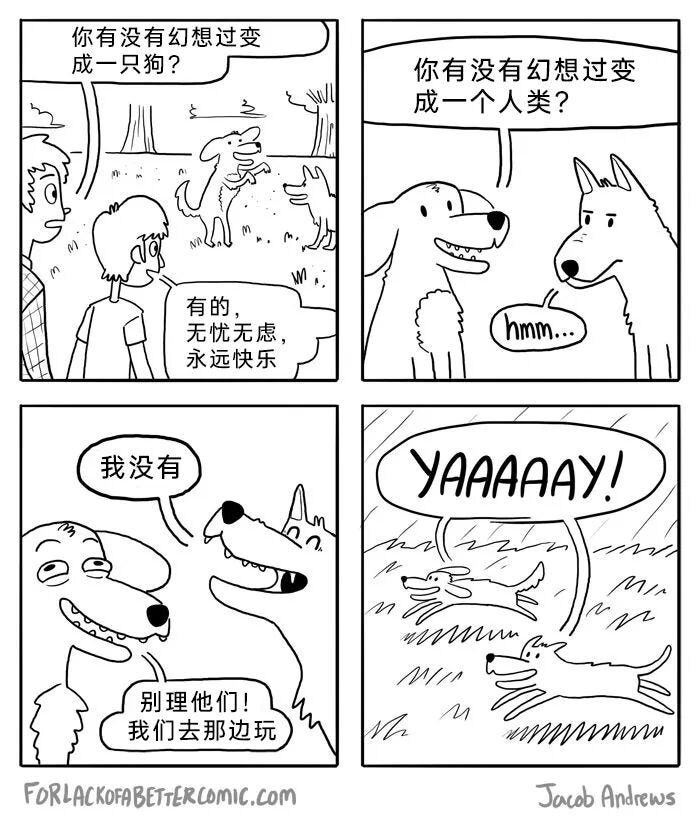
幽默:狗和人
关键词:
幻想 (huànxiǎng) delusion
变成 (biànchéng) to turn into
无忧无虑 (wúyōuwúlǜ) carefree and without worries (idiom)
永远 (yǒngyuǎn) forever, eternal
快乐 (kuàilè) happy
人类 (rénlèi) humankind
别理 (biélǐ) Ignore it!
More from AllSet Learning
This summer, we’re launching a brand-new course: “Beyond the Guidebook: A Chinese Travel Course”, and it’s unlike any travel-focused Chinese course you’ve seen before.
Each lesson takes you deep into one of China’s most fascinating cities, from iconic destinations like Beijing and Chengdu to lesser-known gems that even seasoned travelers often overlook. Beyond the landmarks, you’ll discover the side streets, the hidden restaurants, the local stories. The kind of detail that only makes sense once you can actually speak the language.

The course is designed for intermediate learners (B1 and above) and combines cultural reading, real-life travel dialogues, and travel-centric discussion to build both your fluency and your confidence. Every lesson is a live, one-on-one session with a trained native Chinese teacher, so you get the local insight and the language practice, all in 60 minutes.
And yes, one lesson is a complete surprise. We call it the 盲盒课 (mystery box lesson): a destination kept secret until the moment class begins. You won’t know where you’re going. That’s the point.
